
Case Study · eCommerce · Performance Marketing
Building a Scalable eCommerce Engine in a COD-Driven Market
How a structured performance system took an Egyptian creator-equipment brand from 1–2 orders a day to a predictable revenue engine generating over 10.7M EGP through paid media.
Daily Orders
Revenue via Paid Media
Return on Ad Spend
Cost per Purchase
01Executive Summary
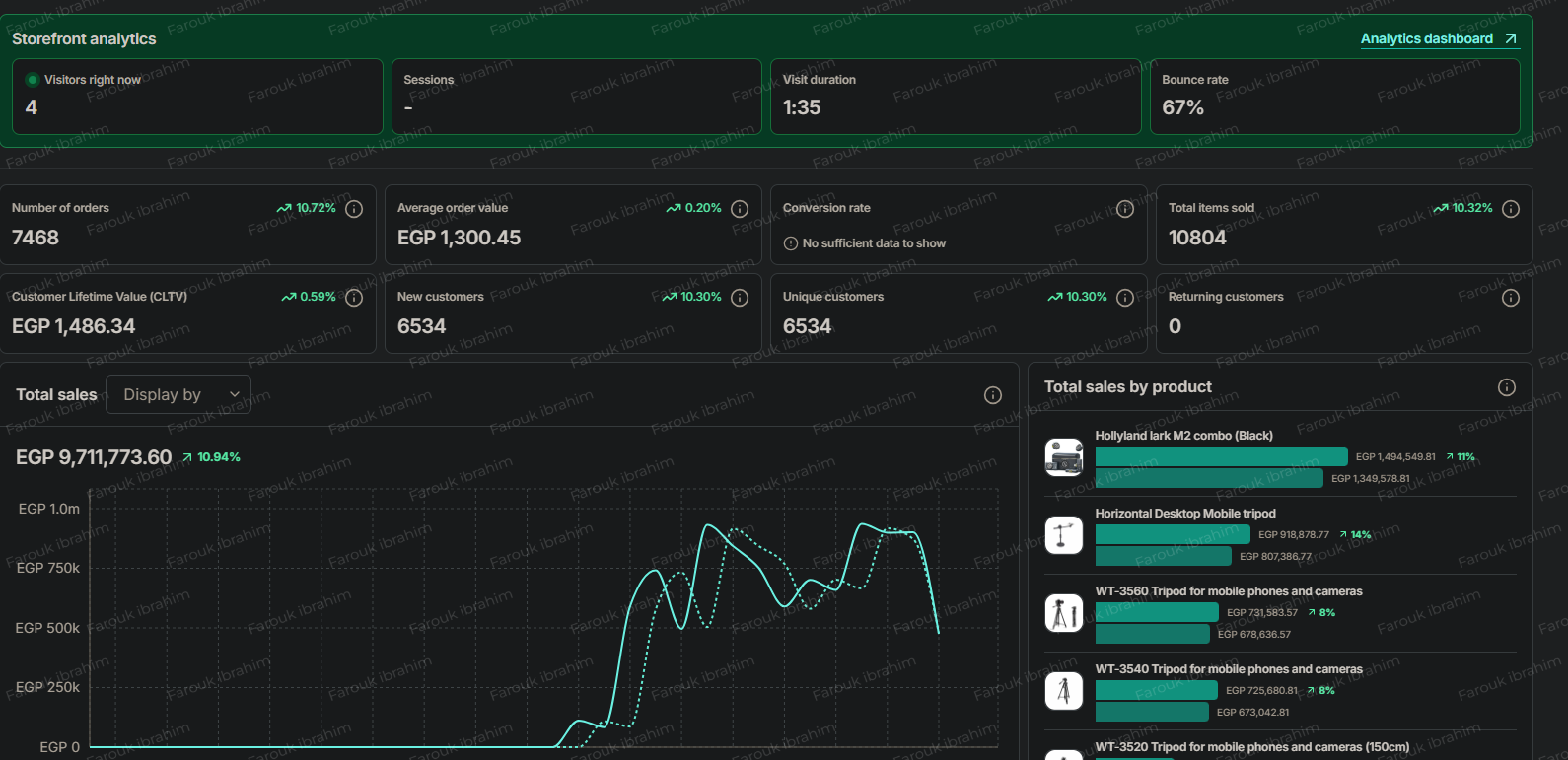
When I started managing this account, the brand was generating only one to two orders per day in the Egyptian market. With an average order value of roughly 1,300 EGP and a business model relying heavily on cash on delivery (around 90%), scaling demanded tight financial control and a structured performance framework — not just more spend.
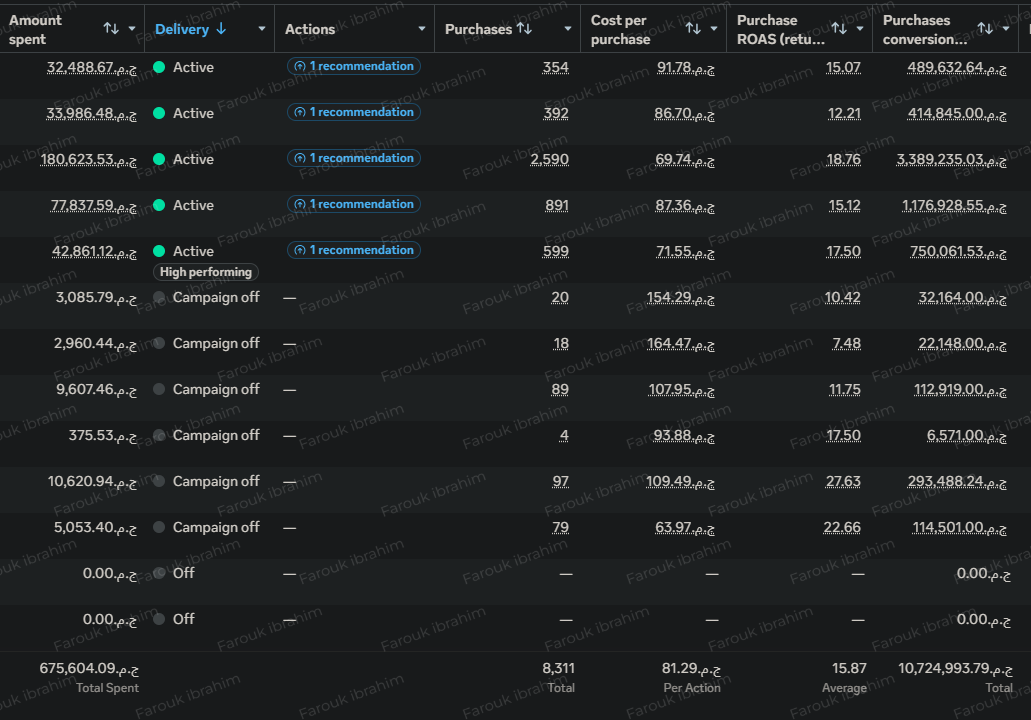
Through disciplined restructuring and profitability-led execution, the account now consistently produces around 40 orders a day, holds a return on ad spend reaching 18.7x on its primary scaling campaign, and has driven over 10.7M EGP in conversion value through paid media — on a total ad spend of roughly 726K EGP.
02Business Background
The brand operates in Egypt, specializing in camera accessories and content-creation tools — tripods, wireless mics, and mobile rigs in the mid-ticket range. That price band meant every campaign had to balance accessibility with a strong value perception.
Because the model was COD-heavy, operational stability and acquisition efficiency were critical. Any uncontrolled scaling could quickly damage margins through return risk and cash-flow delays. The product had clear demand — what it lacked was a structured growth system to capture it profitably.
03Initial Diagnosis
At the start, the account had no defined performance architecture. Retargeting wasn't implemented, creative testing was limited, and scaling decisions weren't tied to clear financial thresholds.
The issue was never demand — it was structure. Campaign roles were unclear, budget allocation was reactive, and performance stability was weak. In a competitive Egyptian market, that naturally capped growth before it could start.
04Strategy & Framework
The first move was rebuilding the acquisition engine from the ground up, organized around three principles:
Clear campaign roles
Campaigns were restructured with defined objectives — separating testing from scaling, and aligning budget deployment with profitability logic instead of guesswork.
Problem-solution creative
Creative direction shifted toward messaging built for content creators and photographers. Testing ran in controlled waves, so scalable winners were identified consistently rather than at random.
Data-driven scaling
Budget increases were gradual and tied to validated creative performance and cost thresholds — keeping acquisition costs inside safe profitability margins at every step.
05Execution & Scaling
Once performance stabilized, structured retargeting layers were introduced to capture high-intent traffic and lift overall conversion efficiency. Budget increases were based on proven creative performance and cost thresholds — never aggressive expansion for its own sake.
This disciplined approach moved the account from unstable daily sales to consistent 40-order days without inflating acquisition cost. The primary prospecting campaign alone delivered a 15.1x ROAS across 333K EGP in spend, while the top scaling campaign reached 18.7x.
06Performance Outcome
The shift from 1–2 daily orders to roughly 40 represents a structural transformation, not a temporary spike. With cost per purchase held between 50 and 87 EGP and ROAS reaching 18.7x on scaling, the brand moved into a predictable revenue engine.
Paid media is now the primary growth driver, contributing over 10.7M EGP in attributed conversion value — alongside a store-wide total surpassing 9.7M EGP in sales over the period.
07Strategic Takeaway
In COD-driven eCommerce, growth isn't about traffic volume. It takes structure, disciplined testing, and strict financial awareness.
When performance marketing runs as a controlled system rather than a set of isolated campaigns, scaling becomes predictable, profitable, and sustainable.